
Our Services
Binary Exploitation
Identifying and exploiting vulnerabilities at the binary level to uncover risks that source code review alone cannot catch.
What is Binary Exploitation?
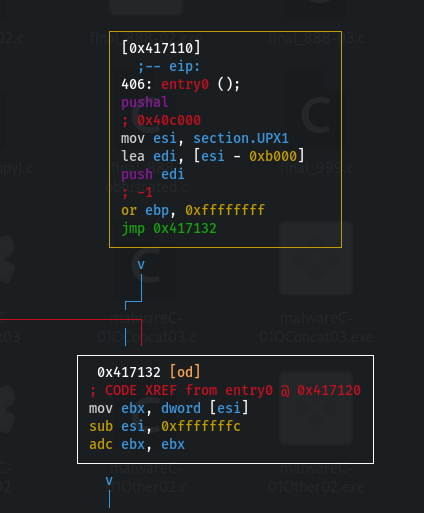
Binary exploitation is the discipline of finding and leveraging vulnerabilities in compiled programs, software you cannot read as source code. By analyzing the raw executable, our team identifies memory corruption issues, logic flaws, and unsafe function usage that can be chained into privilege escalation, remote code execution, or full system compromise.
This service is critical for organizations deploying C/C++ applications, embedded systems, firmware, and legacy software where source code may be unavailable or incomplete.
Common Vulnerability Classes We Target
- Stack and heap buffer overflows
- Format string vulnerabilities
- Use-after-free and double-free
- Integer overflow and underflow
- Race conditions
- Unsafe C function usage (strcpy, gets, sprintf, memcpy)
- Missing or bypassable memory protections (ASLR, DEP, stack canaries)
Our Process
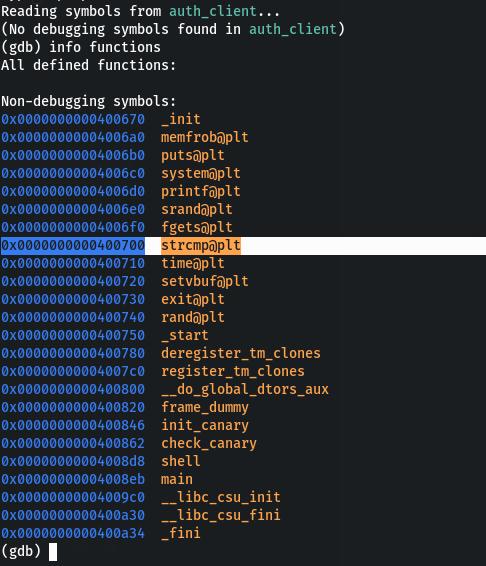
- Reverse Engineering: Disassembly and decompilation to reconstruct program logic
- Fuzzing: Automated input generation to trigger unexpected behavior
- Exploit Development: Proof-of-concept exploit to demonstrate real-world impact
- Mitigation Review: Assessment of existing protections and recommendations to harden the binary
- Report: Detailed findings with CVSS scoring and remediation steps